← Back to work
A game where you
Narrative Game × AI Art Pipeline · Self-initiated
A game where you
run the radio
Work in progress Vertical slice live at rush-mauve.vercel.app
Narrative Game × AI Art Pipeline · Self-initiated
Work in progress Vertical slice live at rush-mauve.vercel.app
At a glance
The game
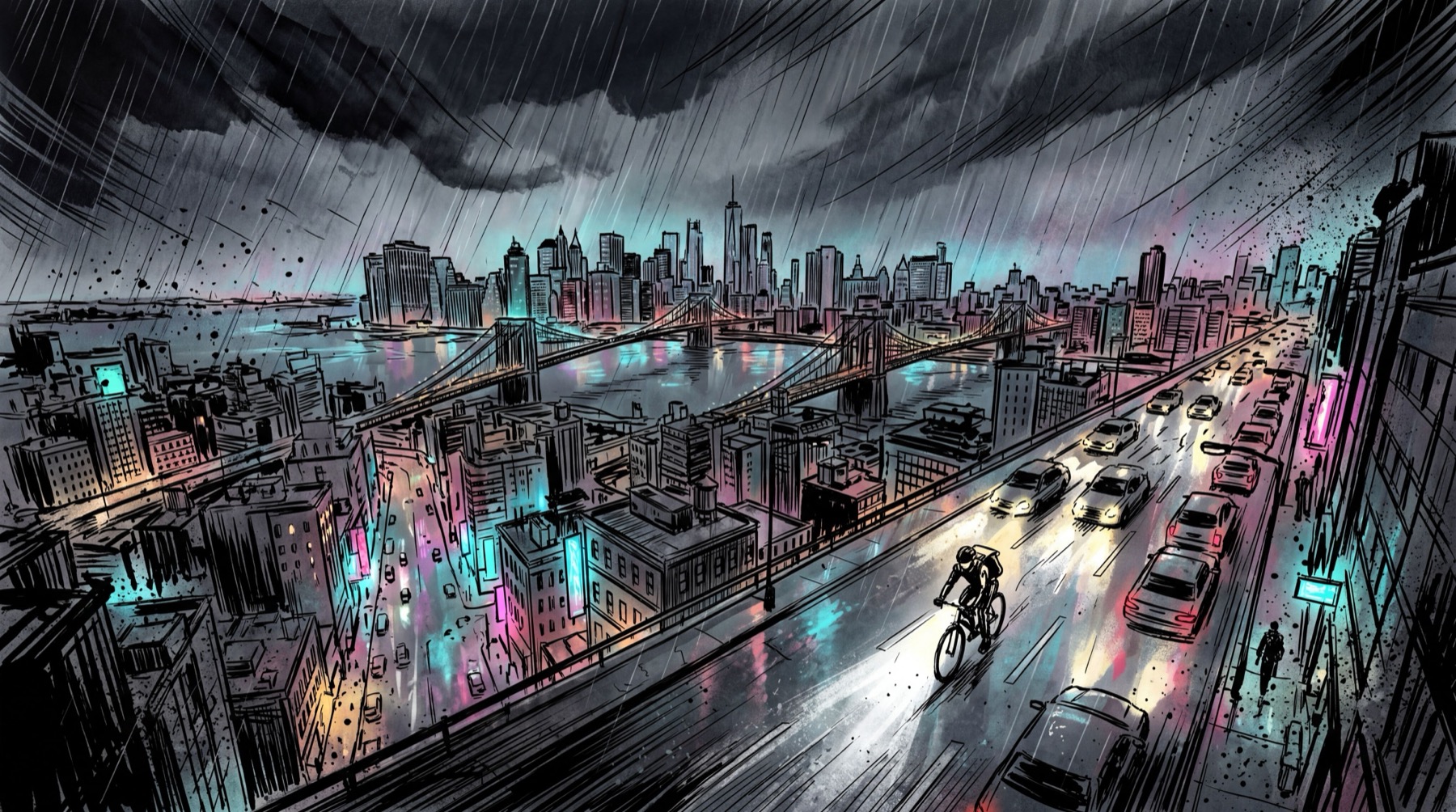
RUSH is a story game about dispatching couriers. You play Eli, who used to be the best bike courier in Calder. Now he’s stuck behind a radio, running dispatch for The Pigeons, a courier crew that’s slowly falling apart in a city where it never stops raining.
You never actually ride. You sit in the chair, pick who goes out on each job, and then deal with whatever happens to them out there.
The way I describe it is Premium Rush meets Telltale, and the whole thing plays out on a dispatch board.
What I did
I did the concept, story, game design, UI, frontend, art direction and sound on my own. Instead of a team, I used a set of tools. Claude Code helps me with the code and the writing. Nano Banana 2 makes the art, which I generate in bulk with PRESSRUN, the tool from the previous project. And Gemini TTS does the voices.
The mechanic
There are no dialogue options in RUSH. Every decision happens on a live map of Calder. A job comes in, a timer starts, and you click the rider you want to send. I wanted the interface itself to be how you tell the story, rather than something sitting on top of it.
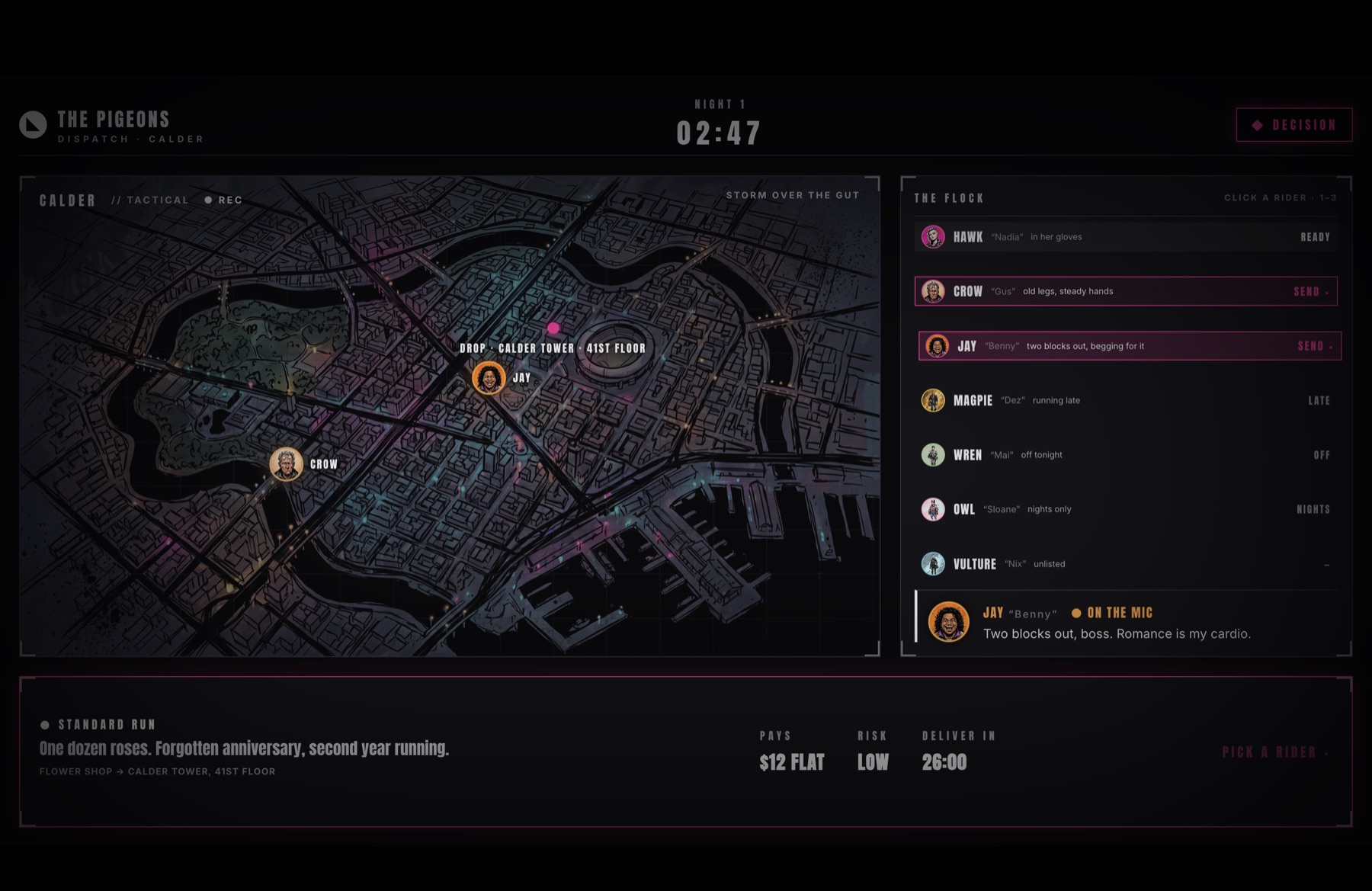
The board during a shift: a storm coming in, 02:47 on the clock, a $12 flower delivery, and seven riders waiting.
In play
You might get a dozen roses across town for $12, or rent money: $4,200 for an unmarked package, no questions asked. Each job shows you the pay, the risk and the deadline, and the clock keeps running while you think about it.
The riders talk back to you over the radio. Who you send changes the story you get.
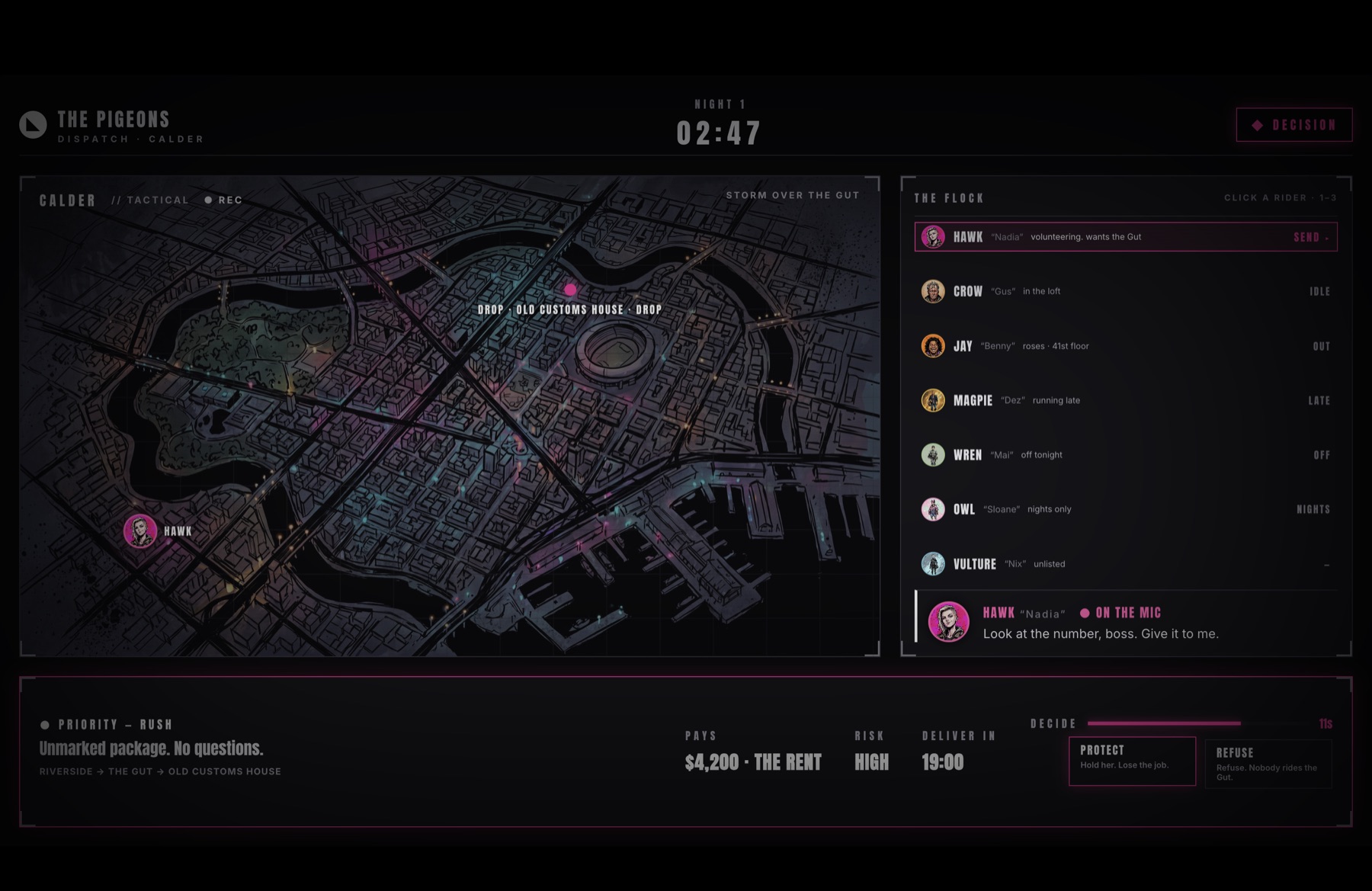
The rent job: $4,200, high risk, no questions asked. You can always say no.
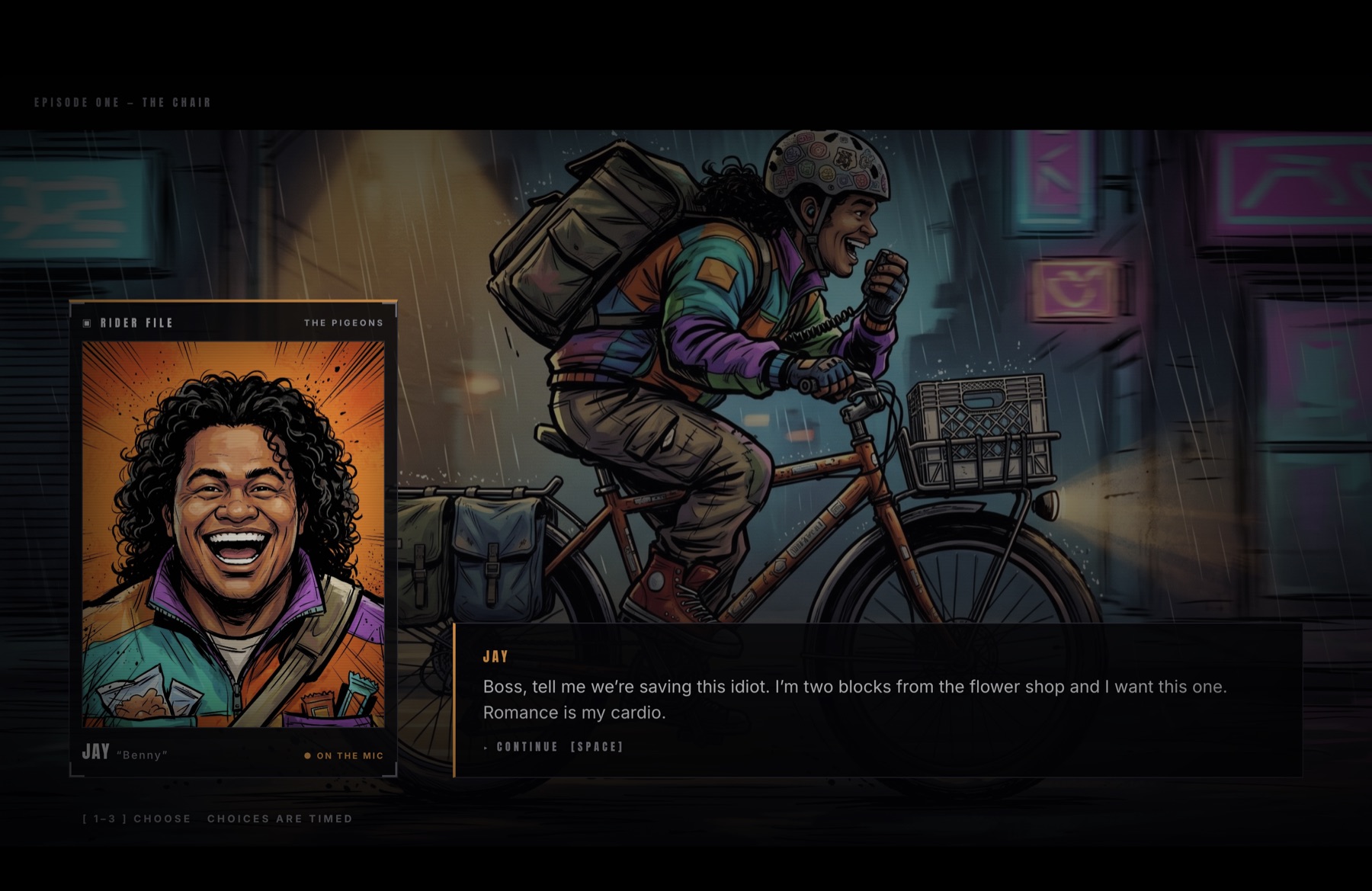
Jay talking on the radio, two blocks away, with his rider file on the left.
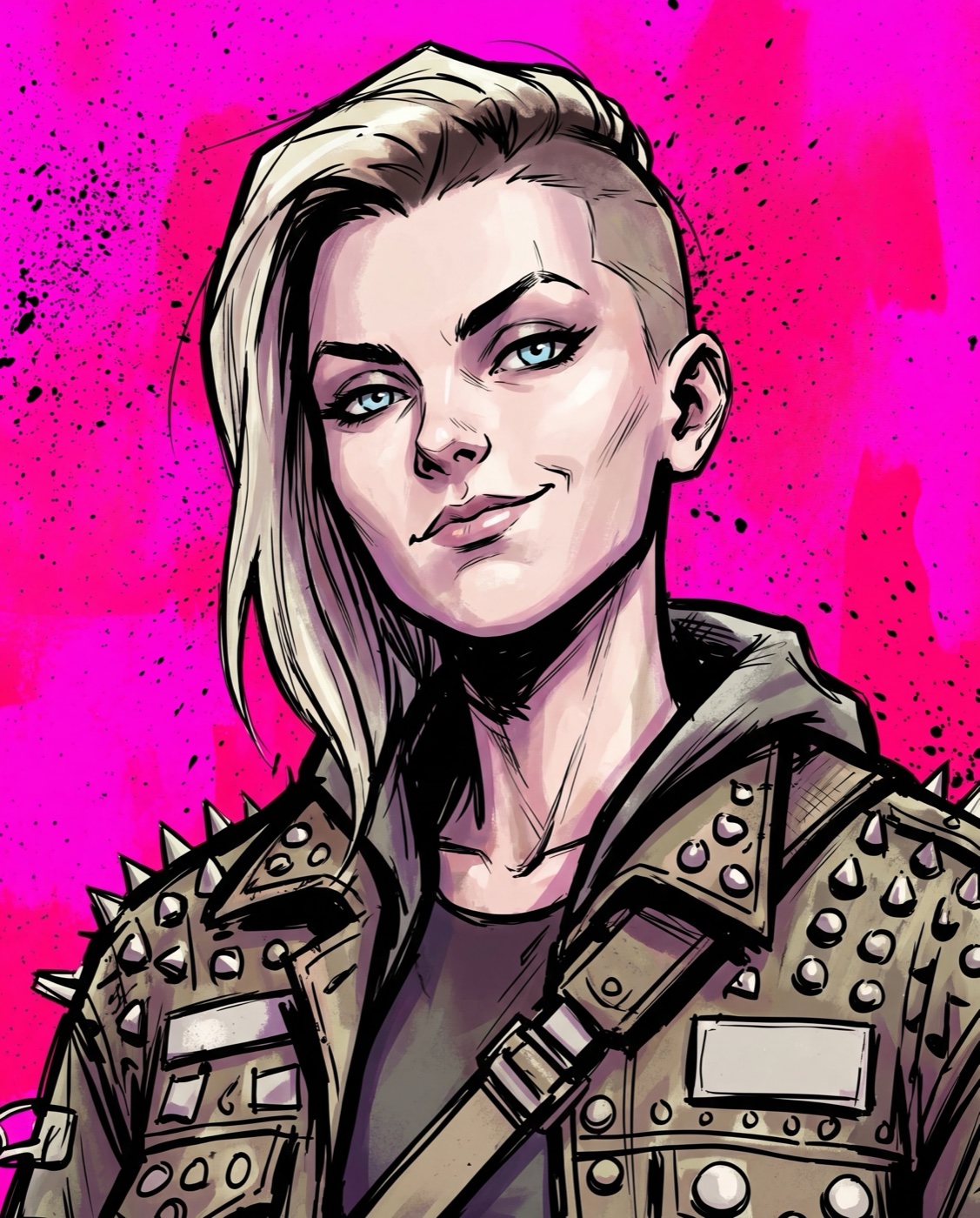
The HUD rule
The whole HUD is grey, and I only let myself use two colors. Magenta means act now. Timers, riders you can send, anything on the clock. Yellow belongs to one person only. Eli, the voice in your ear.
That way the colour tells you what the game needs from you before you even read anything. That’s Hawk on the left. Riders use the colour too, so when she lights up, she’s ready to go.
Keeping AI art consistent
The biggest problem I hit was that AI image models redesign the whole room every time you make a new image. So I stopped asking them to imagine things. First I make reference images of the empty dispatch office, each rider’s bike, and every helmet and radio. Then every scene prompt points back to those, along with the character sheet.
That way the model copies instead of making things up, so the loft has the same six monitors in every shot.
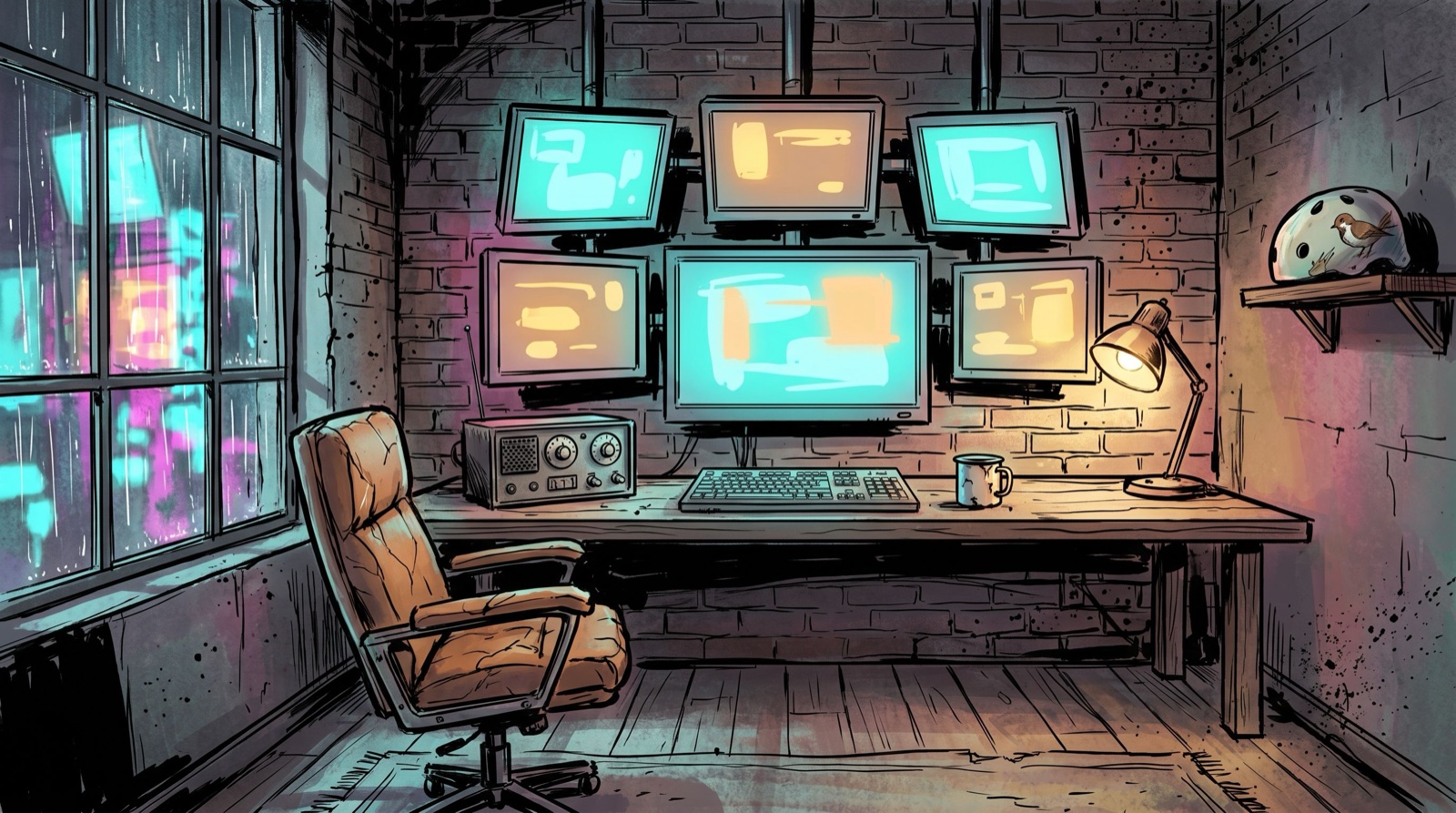
The reference image for the loft, with the six monitors.
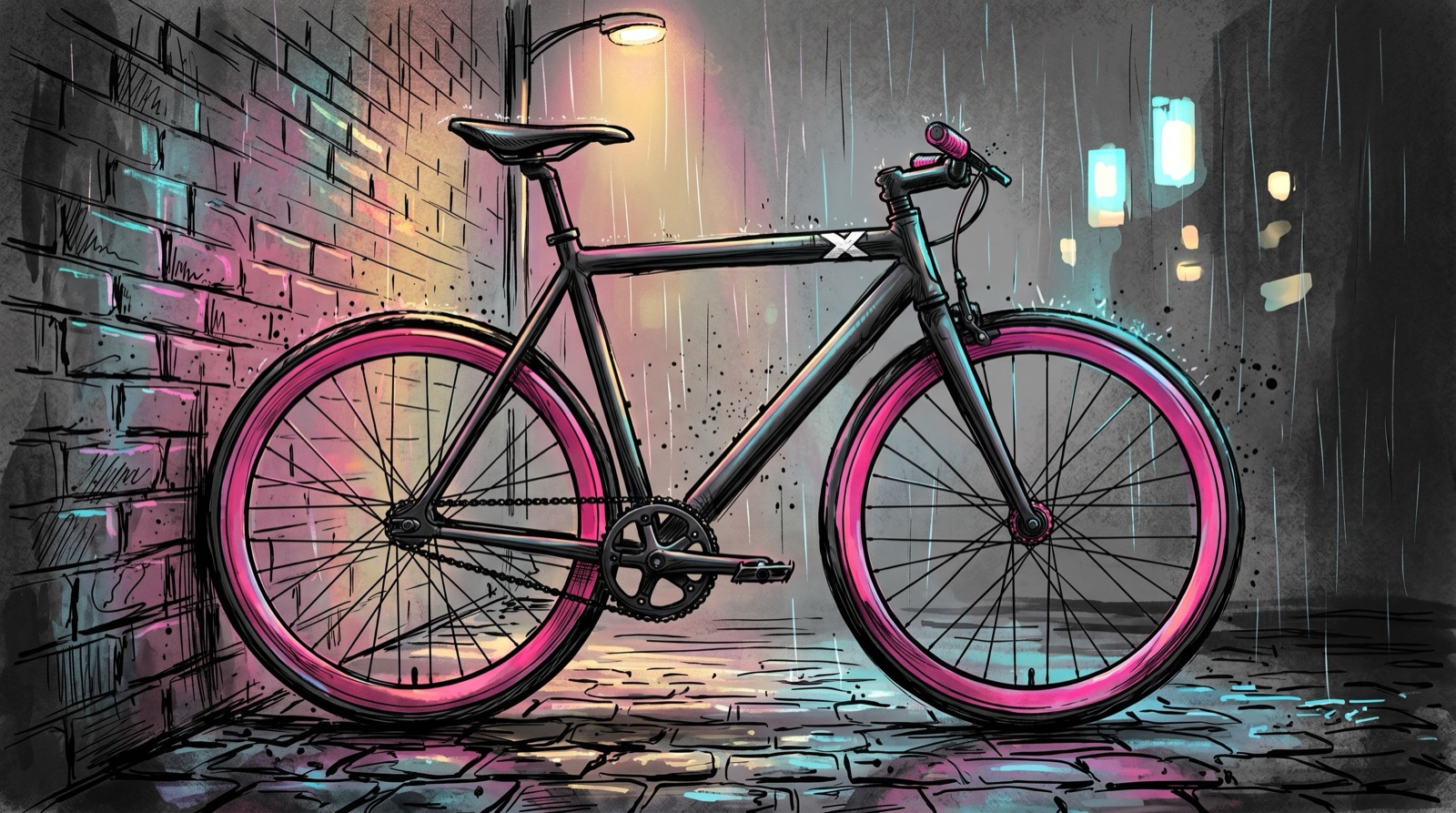
The reference image for Hawk’s bike, with her magenta rims.
Space as character
I treated Pigeons HQ like a film set, with its own location guide. There’s the dispatch nook where Eli sits alone, the common room where the crew hangs out, the garage, the stairwell where soaked riders come running in, and the pigeon coop on the roof.
Every moment in the story is shown in the exact room where it happens, so the place starts to feel familiar.
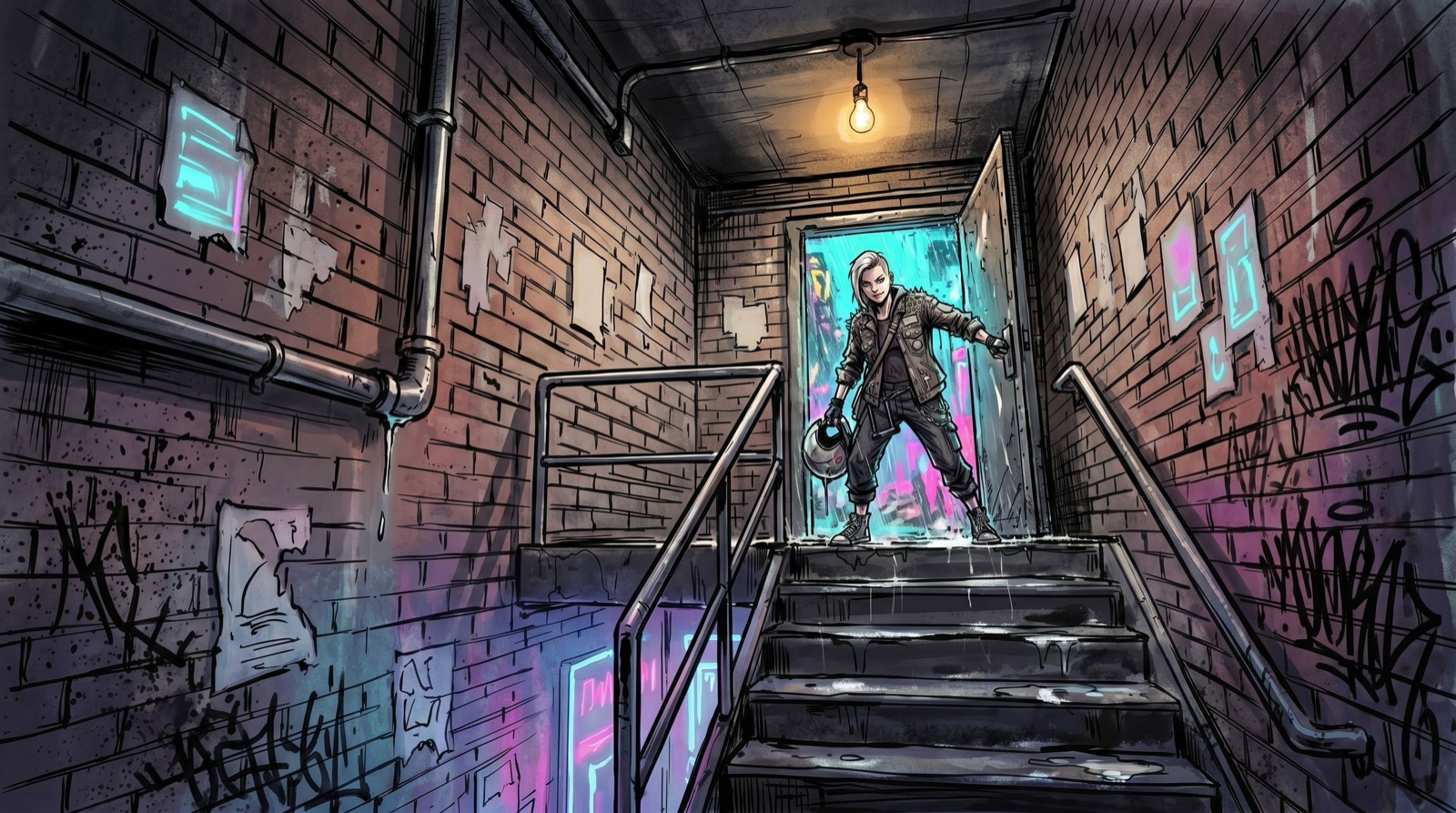
Hawk, soaked, hitting the stairwell door.
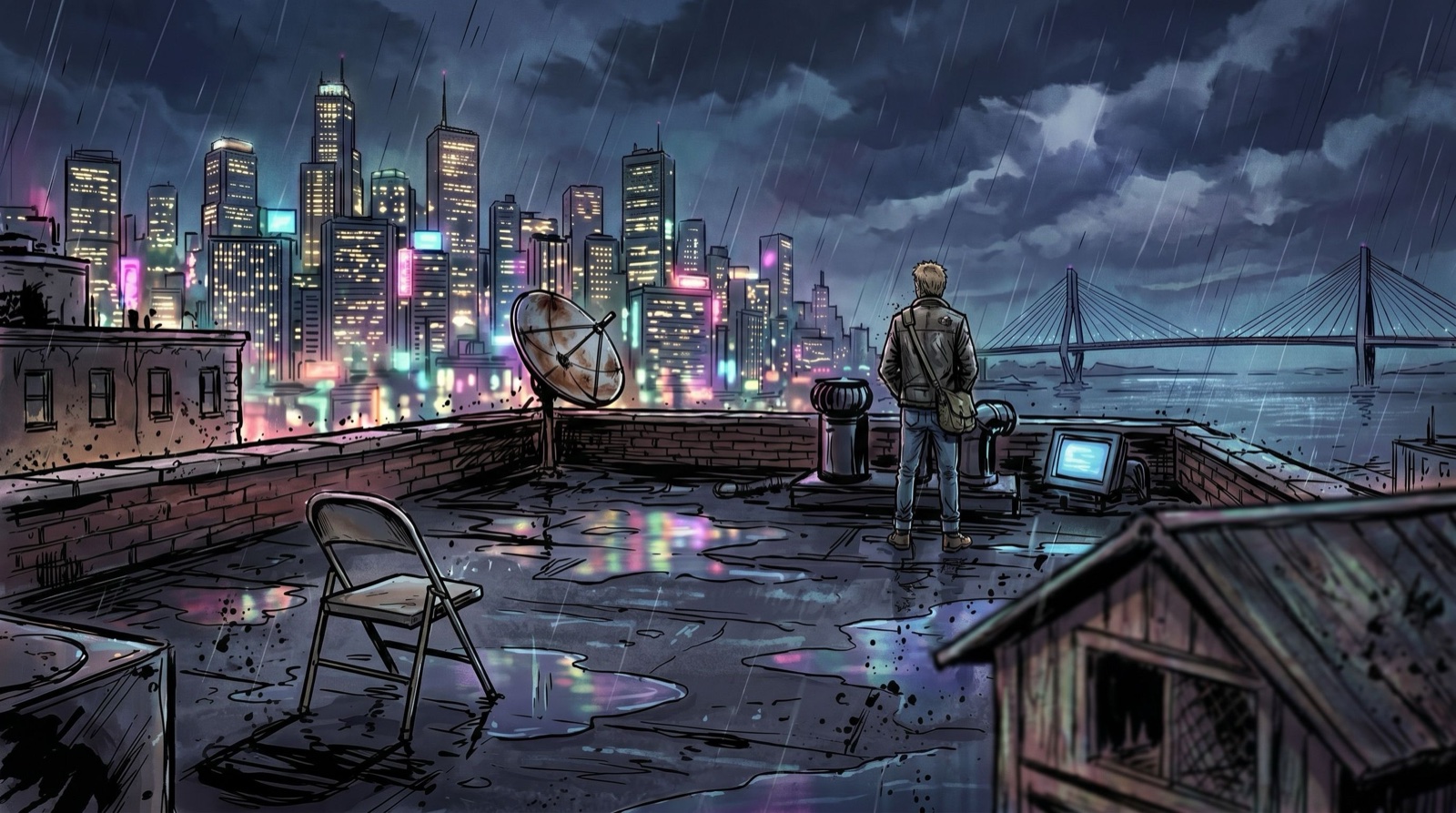
Eli on the roof, with the pigeons.
Where it's at
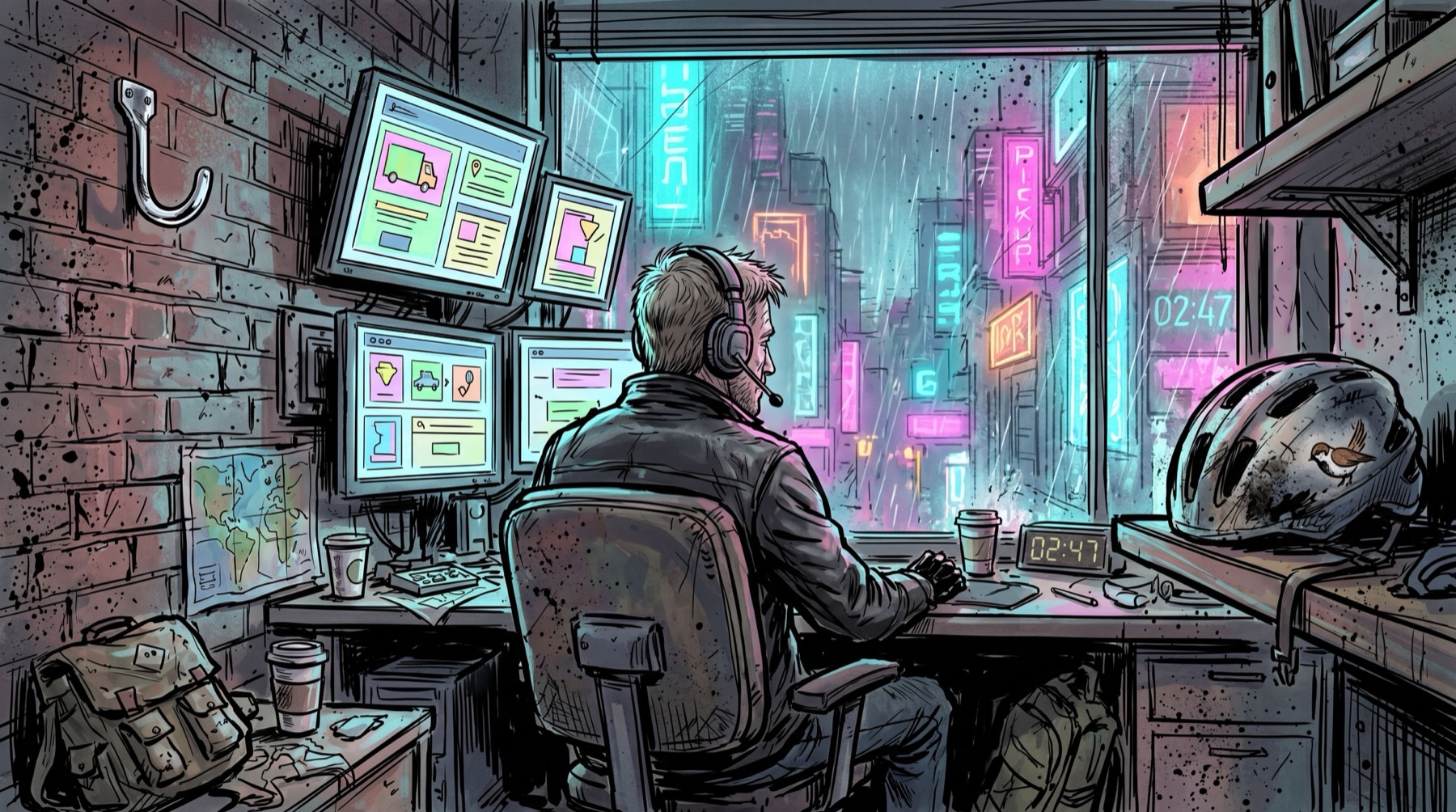
The Episode 1 key art. Like all the art in RUSH, it was made with PRESSRUN.
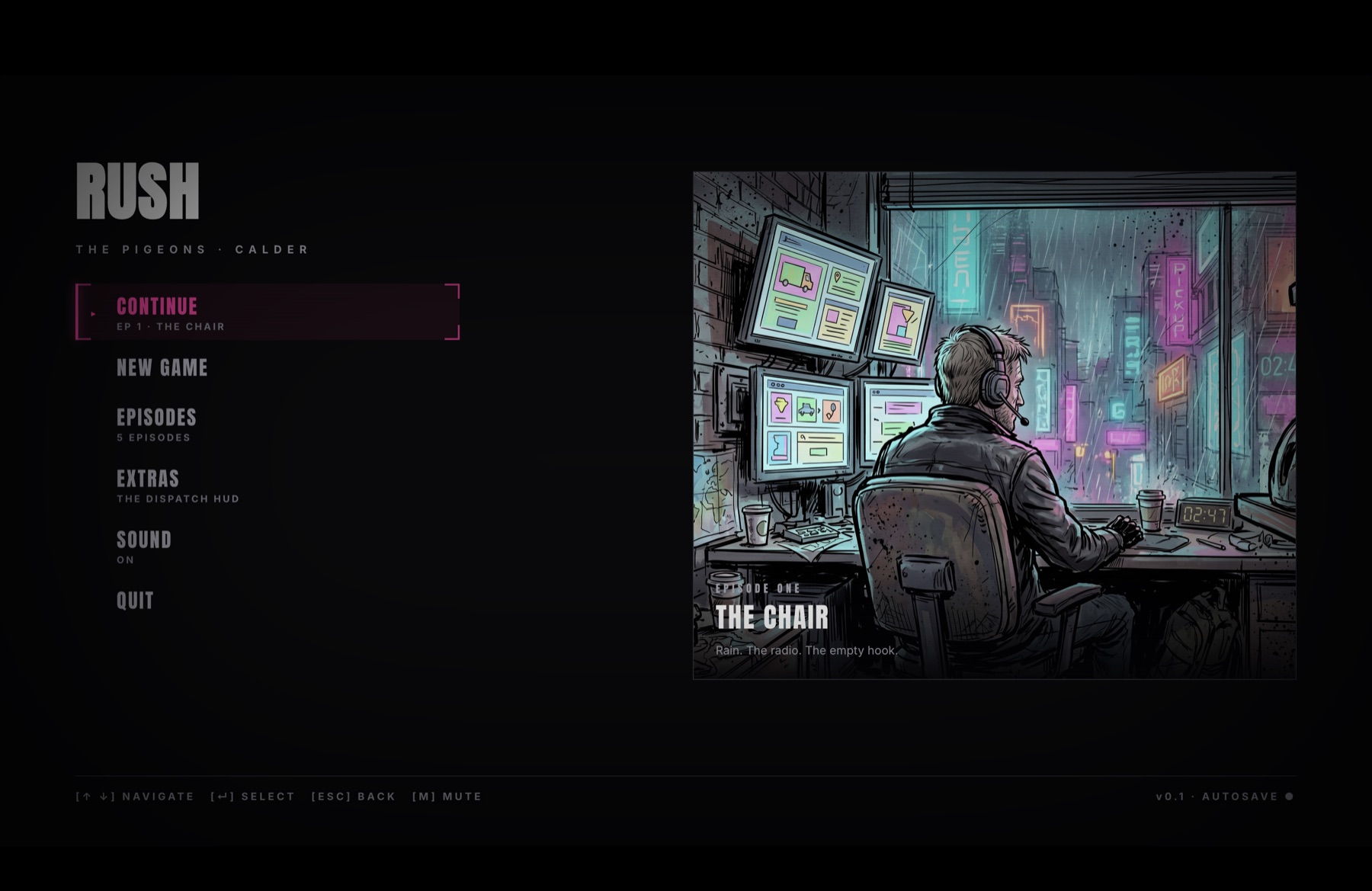
The same art on the title screen of the version you can play.
The whole first episode is playable from start to finish, with the full story, art, voice over and sound. I’m still working on episodes 2 to 5, voice acting for the riders, and making your choices matter more. Last updated June 2026.