← Back to work
A tennis museum
Immersive · ITHF × Infosys
A tennis museum
you can walk around
online
Launched June 30, 2023

Immersive · ITHF × Infosys
Launched June 30, 2023
At a glance
(Credit)
I worked on this project as a UX/UI designer at Charles Elena, working with Infosys for the International Tennis Hall of Fame. The project belongs to Charles Elena, Infosys and the Hall of Fame. This page is about my part in it and what I learned.
The brief
The International Tennis Hall of Fame is a real building in Newport, Rhode Island. It has grass courts, 150 years of trophies, and the actual racquets and dresses behind glass. It’s amazing if you can get there, but most tennis fans never will.
So ITHF teamed up with Infosys to rebuild the museum online, as a place you can walk around as an avatar from a laptop, a phone or a headset, wherever you are. It went live on June 30, 2023.
Infosys built the engine. I was on the Charles Elena team as the UX/UI designer, working on everything you see, click on and use to find your way around.
What I owned
I designed every screen a visitor sees: where you start, how you move around, the HUD, how you read about a champion’s career without facing a wall of text, and how trivia gives you points that you can spend in the shop.
The main thing I kept in mind was that a tennis fan who has never played a video game should be able to walk in and not feel lost. There’s no tutorial. You start on the lawn, you see the Hall in front of you, and you walk in.
First thirty seconds
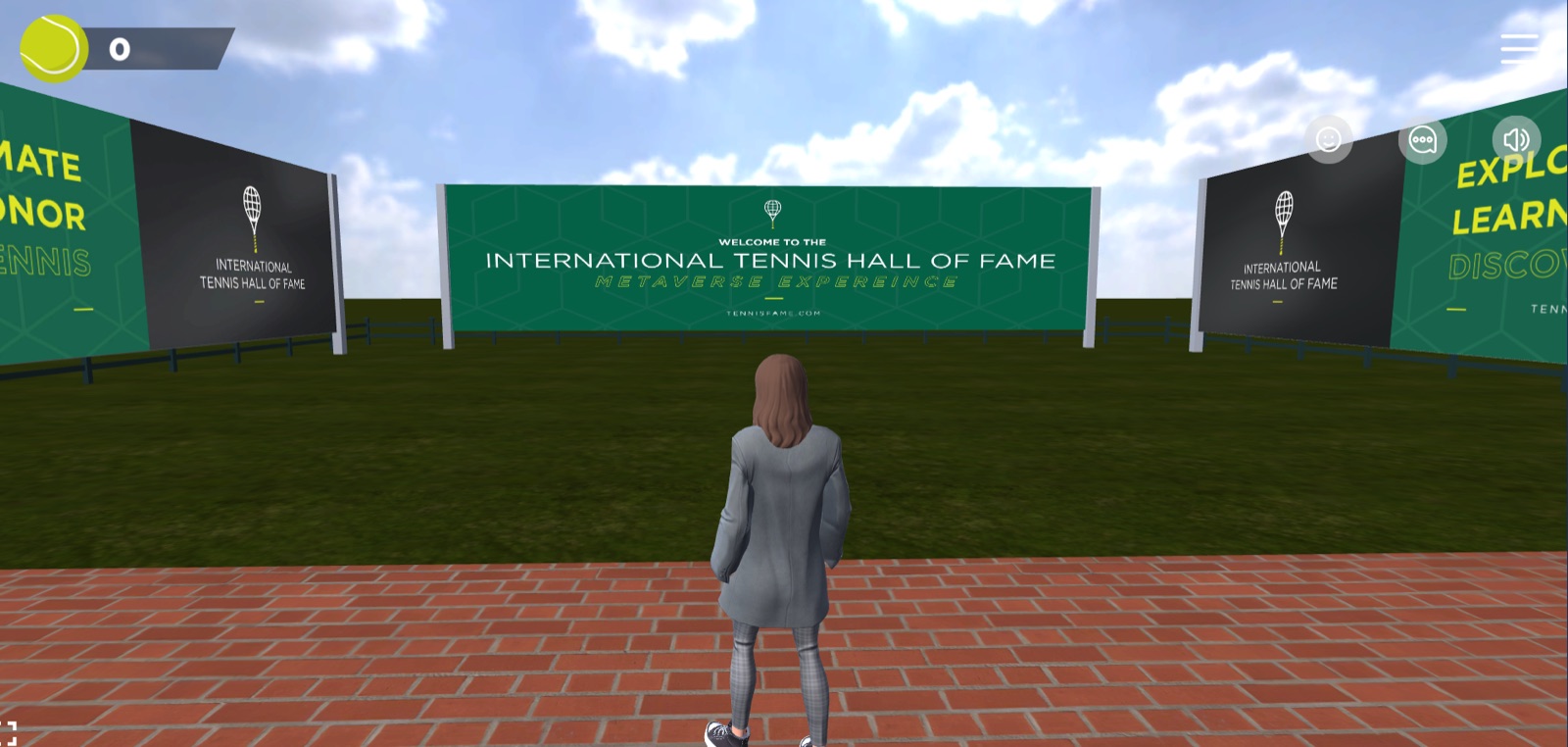
This is where you start: your avatar, the welcome wall, and the Hall straight ahead, with no menu in the way.
The collection
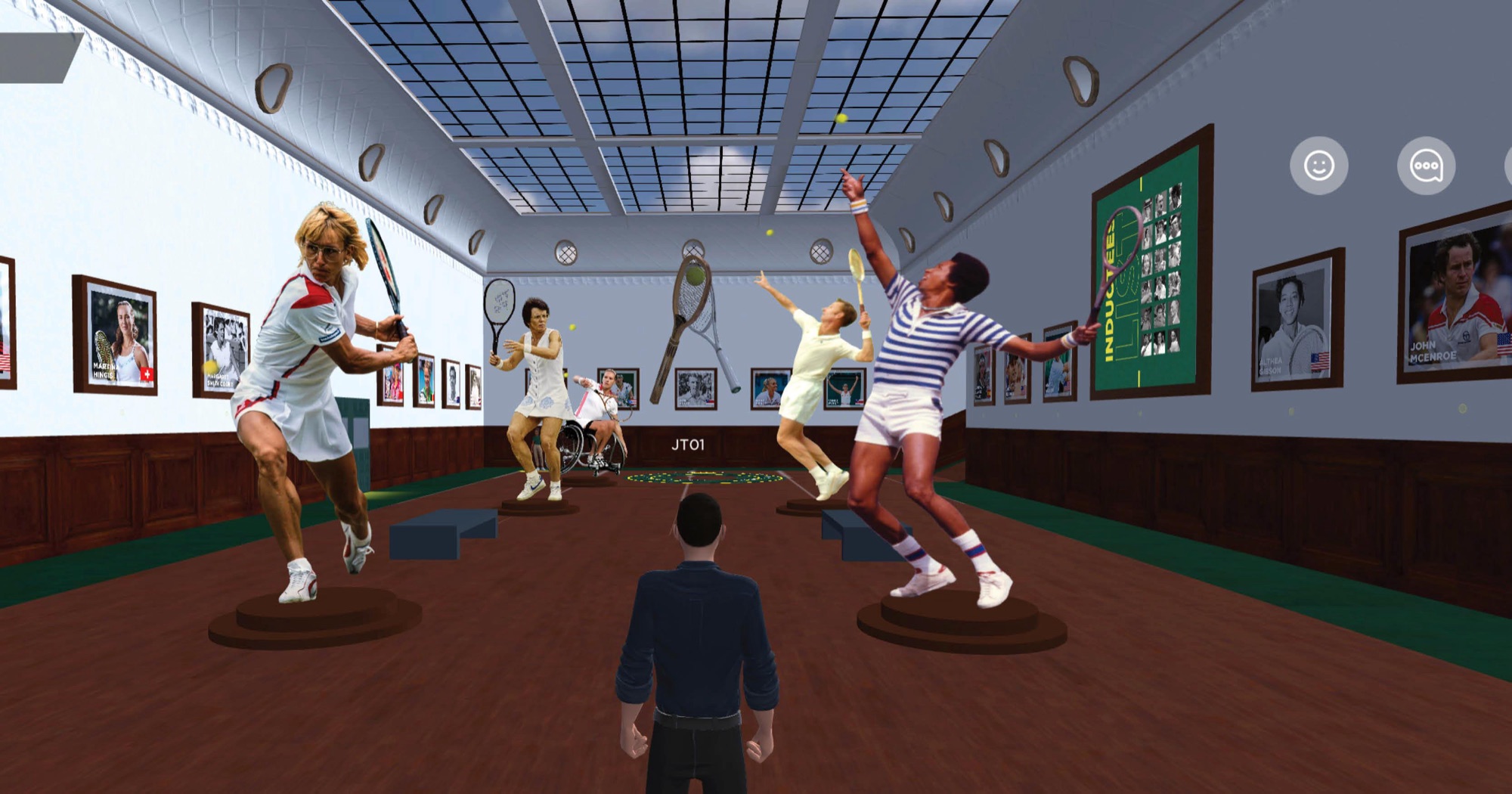
In the gallery, the Hall of Famers aren’t just photos on a wall. They’re 3D figures caught mid-motion, like Billie Jean King at the net, Arthur Ashe serving, Rod Laver, Martina Navratilova, and Esther Vergeer in her chair. You can walk right up to them and all the way around.
Each one has their career stats, titles and some trivia. I really didn’t want it to feel like reading a Wikipedia page, so the story shows up as you get closer, instead of in a big panel you have to open.
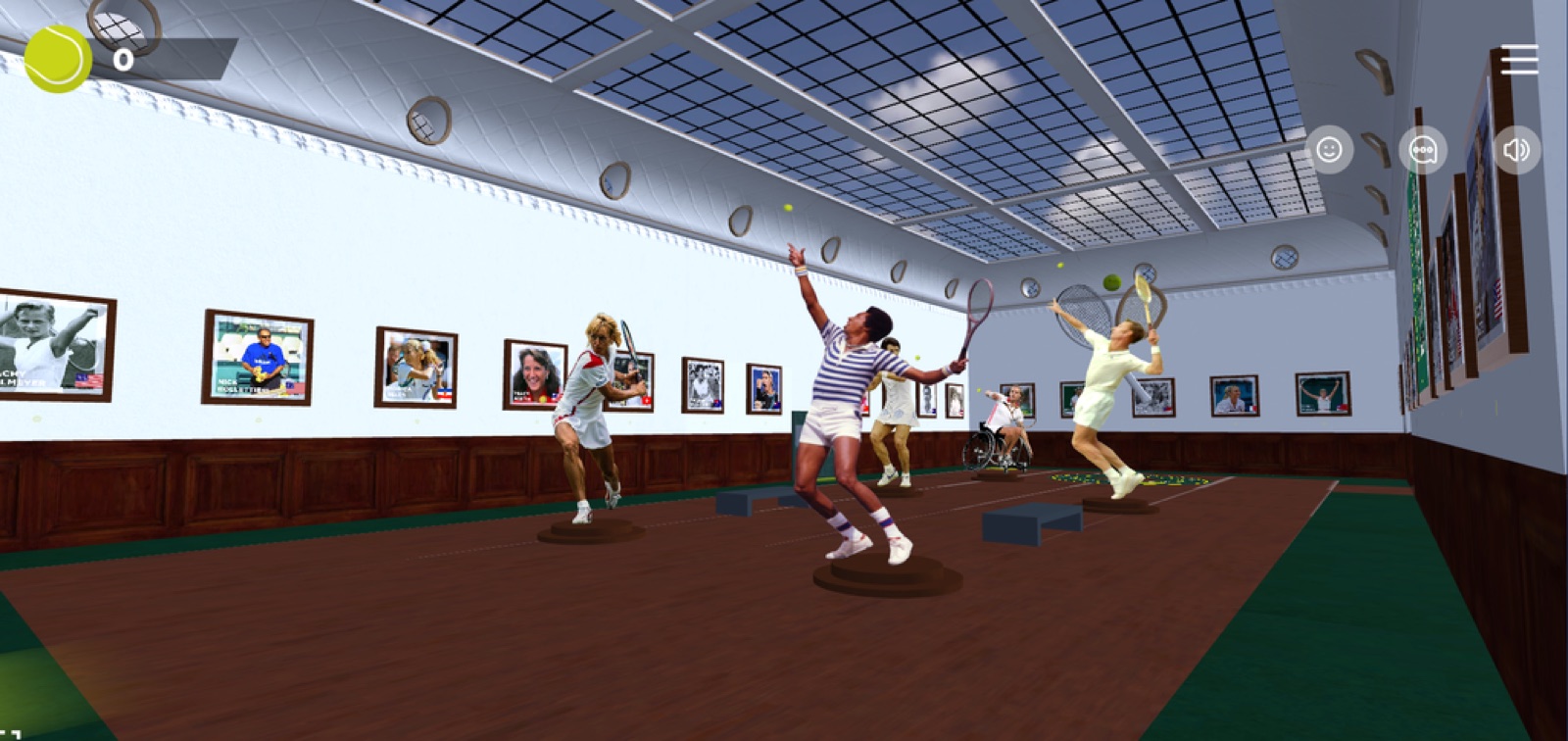
The gallery, with the stats, trivia and rewards built into the room.
Sense of place
We didn’t want to put the exhibits in a plain white room. So the team rebuilt the real grounds: the Victorian clubhouse, the horseshoe piazza, and the grass courts where the sport pretty much started.
On the Horseshoe Court you can even hit a few serves yourself. That mattered to me, because being able to do something there makes it feel like an actual place, not just something you look at. The goal was to make somewhere far away feel close.
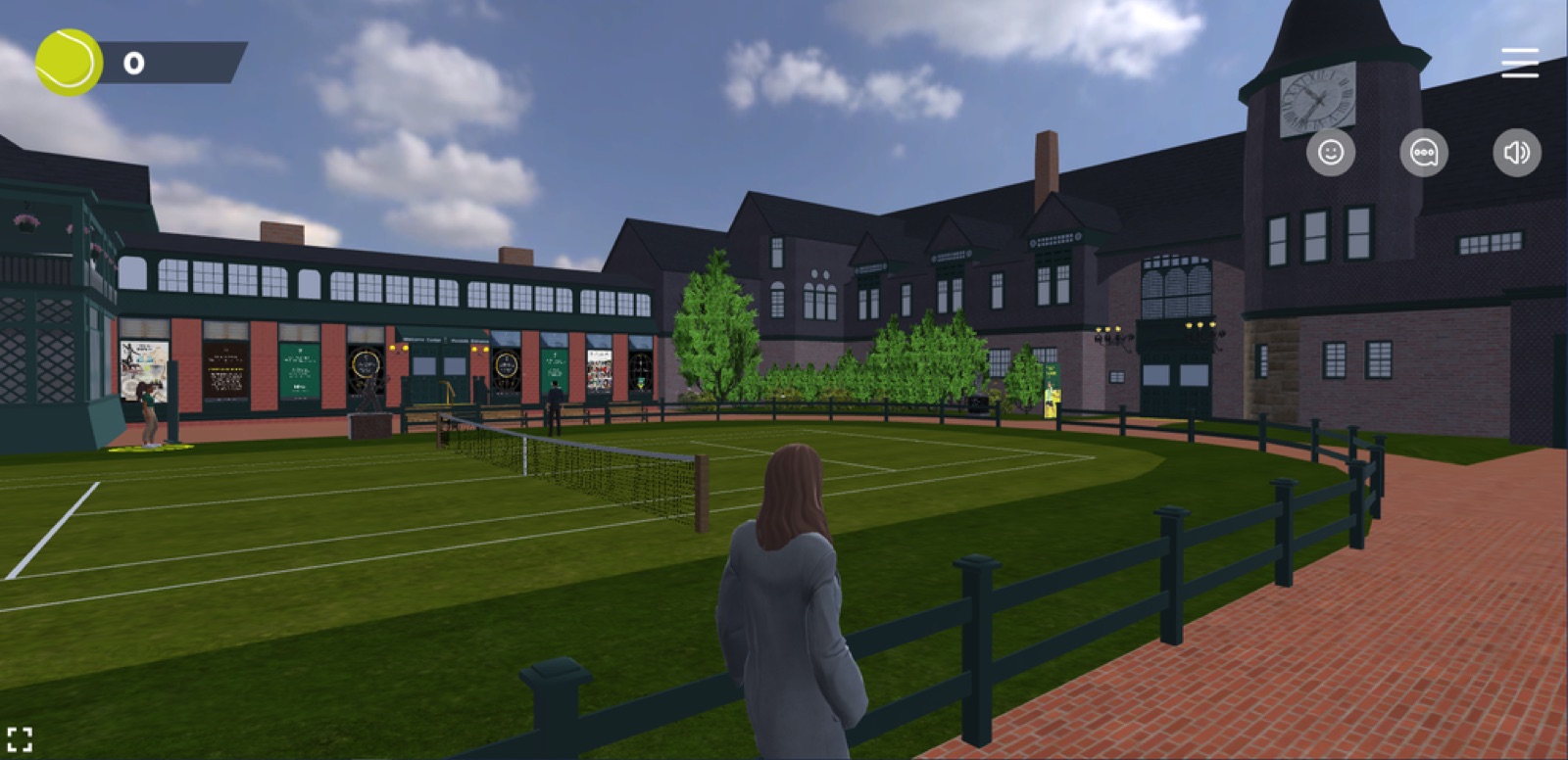
The grass courts.
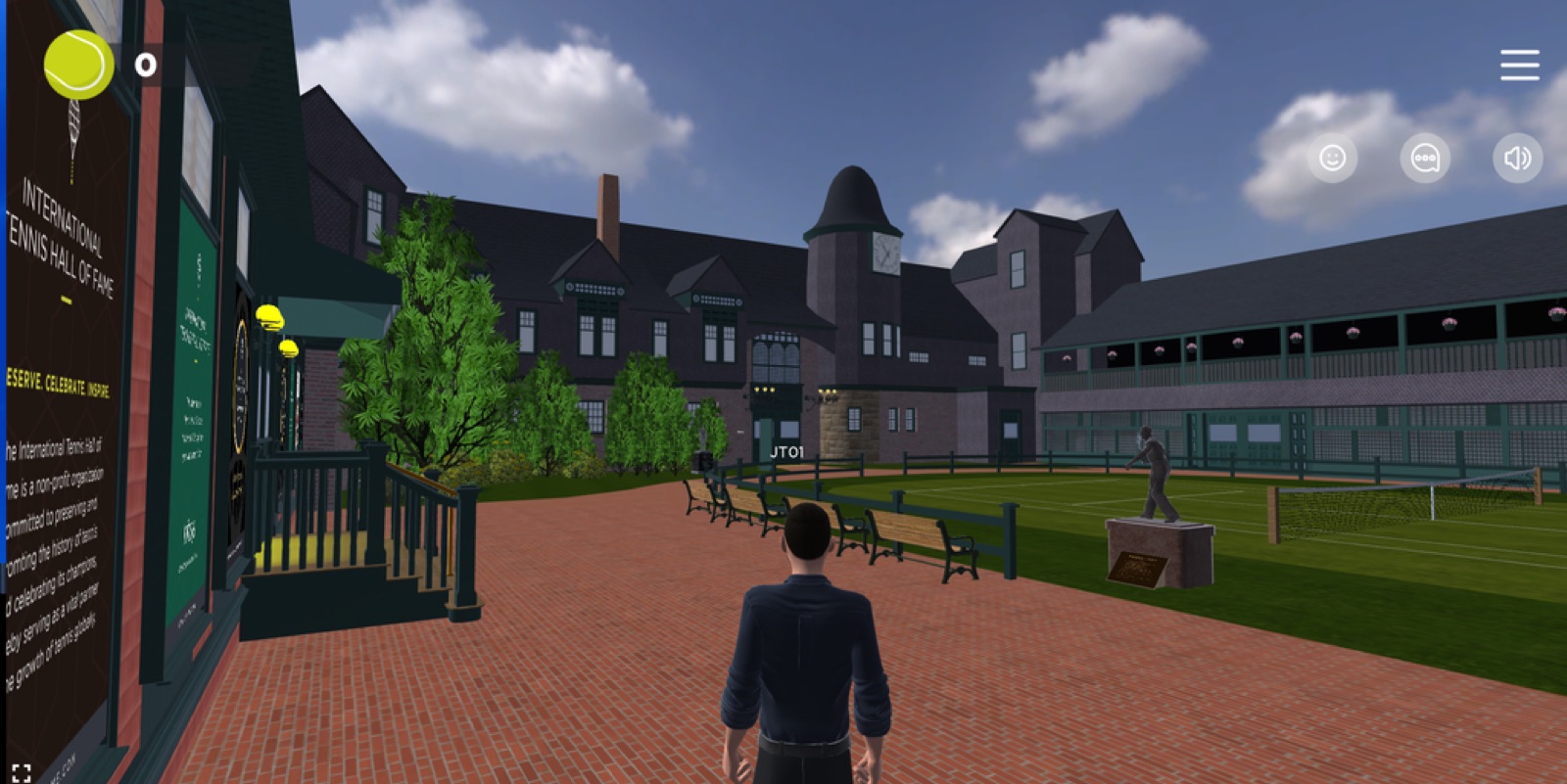
The clubhouse.
Behind the glass
Some of the museum’s most famous objects were modelled in 3D, lit and placed where you can get up close to them.
Stan Smith's Adidas
The original pair. The shoe ended up more famous than the player it was named after.
Graf's 1988 racquet
The racquet from the only Golden Slam in tennis history: all four majors plus Olympic gold.
Serena's 2018 dress
The Virgil Abloh dress she wore for her US Open comeback.
The hardest part
The whole point was that anyone could visit, on any device. But realistic 3D and “opens on a five-year-old laptop or a mid-range phone” pull in opposite directions. The better it looks, the harder people’s devices have to work.
So a lot of the work was finding the balance. How good can the statues look before the scene stops loading for the people we made it for? Where do we spend the detail, and where can we fake it without anyone noticing?
I kept coming back to one question: who can’t get in if we do this? A nicer shadow isn’t worth it if a fan in Manila can’t even load the front door. Most of the time, letting more people in won.
That balance never fully goes away. You just keep choosing the visitor over the pretty screenshot.
The ITHF Metaverse launched in 2023 with Infosys. Here’s the announcement from the Hall of Fame.